Editorial Picks
Seoul's contemporary art galleries and museums
Ten verified contemporary art institutions across Yongsan, Jongno, Jung-gu, and the Cheongdam gallery district — with hours, admission, language coverage, and editorial reading of each institution.
Seoul has emerged over the past fifteen years as one of Asia's most consequential contemporary art capitals, with a tier-one museum cluster anchored in the Yongsan-gu and Jongno-gu axis and a parallel gallery district that has formed around Cheongdam in Gangnam-gu. International collectors and curators arriving in the city for Frieze Seoul, the Korea International Art Fair (KIAF), and Seoul Art Week now treat the city as a default Asia stop alongside Hong Kong, Tokyo, and Singapore, and the strongest indicator of that shift is the wave of European and American mega-galleries — Perrotin, White Cube, Pace, Lehmann Maupin, Thaddaeus Ropac, König Galerie, Massimo De Carlo, and Gladstone — that have opened permanent Seoul outposts in the Cheongdam district between 2017 and 2024. The editorial board's working orientation for international visitors is that the strongest Seoul gallery itinerary pairs the museum cluster (which sits primarily on the north side of the Han River across Yongsan-gu, Jongno-gu, and Jung-gu) with the Cheongdam gallery district (which sits on the south side, in Gangnam-gu) — and runs the two on separate days, because the two sides of the river operate at different opening-hour cadences and stylistic registers. The ten institutions below are the editorial board's verified shortlist across both clusters, cross-checked against each institution's English-language website at the time of publication and against VisitKorea's English museum directory and the Seoul Metropolitan Government cultural directory. We list them alphabetically as Featured A through J rather than in any numerical ranking — the ten institutions operate at meaningfully different scales and stylistic registers, and the right choice for a destination visit depends on what the trip is for. What follows is the verified ten, with hours, admission, language coverage, and the editorial reading of how each institution actually presents to a first-time international visitor.
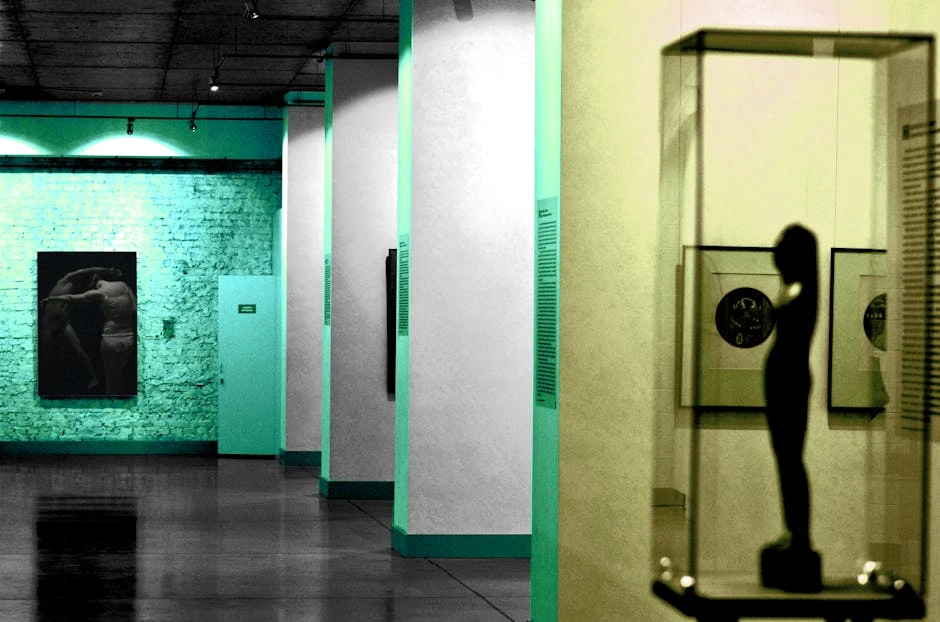
Featured A — Amorepacific Museum of Art (APMA)
The Amorepacific Museum of Art, known internationally as APMA, occupies the lower floors of the David Chipperfield-designed Amorepacific Headquarters in Yongsan-gu at 100 Hangang-daero, completed in 2018 and immediately recognised as one of the most architecturally significant corporate buildings in Korea. The museum is the contemporary-art arm of the Amorepacific Corporation — the Seoul-based cosmetics conglomerate behind Sulwhasoo, Laneige, and Innisfree — and operates a permanent collection of Korean traditional art alongside a rotating contemporary exhibition programme. Hours run 10:00 to 18:00 from Tuesday through Sunday, with last admission at 17:30; the museum is closed Mondays. Admission for special exhibitions runs approximately KRW 12,000 to 18,000 for adults; permanent collection viewing is free. The Chipperfield architecture itself is one of APMA's photographic registers — the central atrium, the Yongsan-gu garden courtyard, and the gridded white-concrete facade pulled around the corporate tower above present a sequence of compositions that international architecture press has covered extensively. The museum's contemporary programme rotates international and Korean exhibitions on roughly six-month cycles and has hosted major shows from Andreas Gursky, Rafael Lozano-Hemmer, and the Korean-American sculptor Anicka Yi. Language support runs full English on the printed materials and audio guide, with Japanese and Chinese also covered on the major exhibitions. APMA pairs naturally with the Leeum Museum on a single Yongsan-gu afternoon — the two sit approximately 15 minutes apart by taxi and present meaningfully different stylistic registers (Leeum on the heritage-and-collection axis, APMA on the contemporary-and-architecture axis).
Featured B — KÖNIG GALERIE Seoul
KÖNIG GALERIE Seoul is the Korean outpost of the Berlin-founded contemporary gallery established by Johann König in 2002, opened in the Cheongdam district in 2021 as part of the broader wave of European mega-gallery openings in Gangnam-gu over the early 2020s. The gallery sits in Cheongdam-dong and operates on the standard Cheongdam gallery cadence — Tuesday through Saturday, 11:00 to 18:00, closed Sundays and Mondays. Admission is free. The gallery's programming runs in synchronisation with the Berlin and London KÖNIG spaces, presenting major rotating shows from gallery artists including Alicja Kwade, Erwin Wurm, Norbert Bisky, and the Korean artist Jeon Joonho. The space is contained within the broader Cheongdam contemporary district that includes Perrotin Seoul, White Cube Seoul, Massimo De Carlo Seoul, SongEun ArtSpace, and the smaller Cheongdam-galleries cluster (Lee Eugean, 333 Gallery, SH Gallery, gallery NoW, and Tang Contemporary Art). The district has organised an unofficial 'Gallery Night Cheongdam' programme on selected Thursday evenings during major art-fair windows (Frieze Seoul in early September, KIAF the same week), with the participating galleries extending opening hours and hosting coordinated artist talks and openings. Language support at KÖNIG runs primarily in English and Korean. The gallery is the right Cheongdam stop for visitors whose primary frame of reference is the Berlin and London contemporary art scene; the stylistic register is more conceptual and more sculpture-leaning than the comparable Cheongdam galleries (Perrotin runs more figurative; Massimo De Carlo runs more painting-led).
Featured C — Leeum Museum of Art
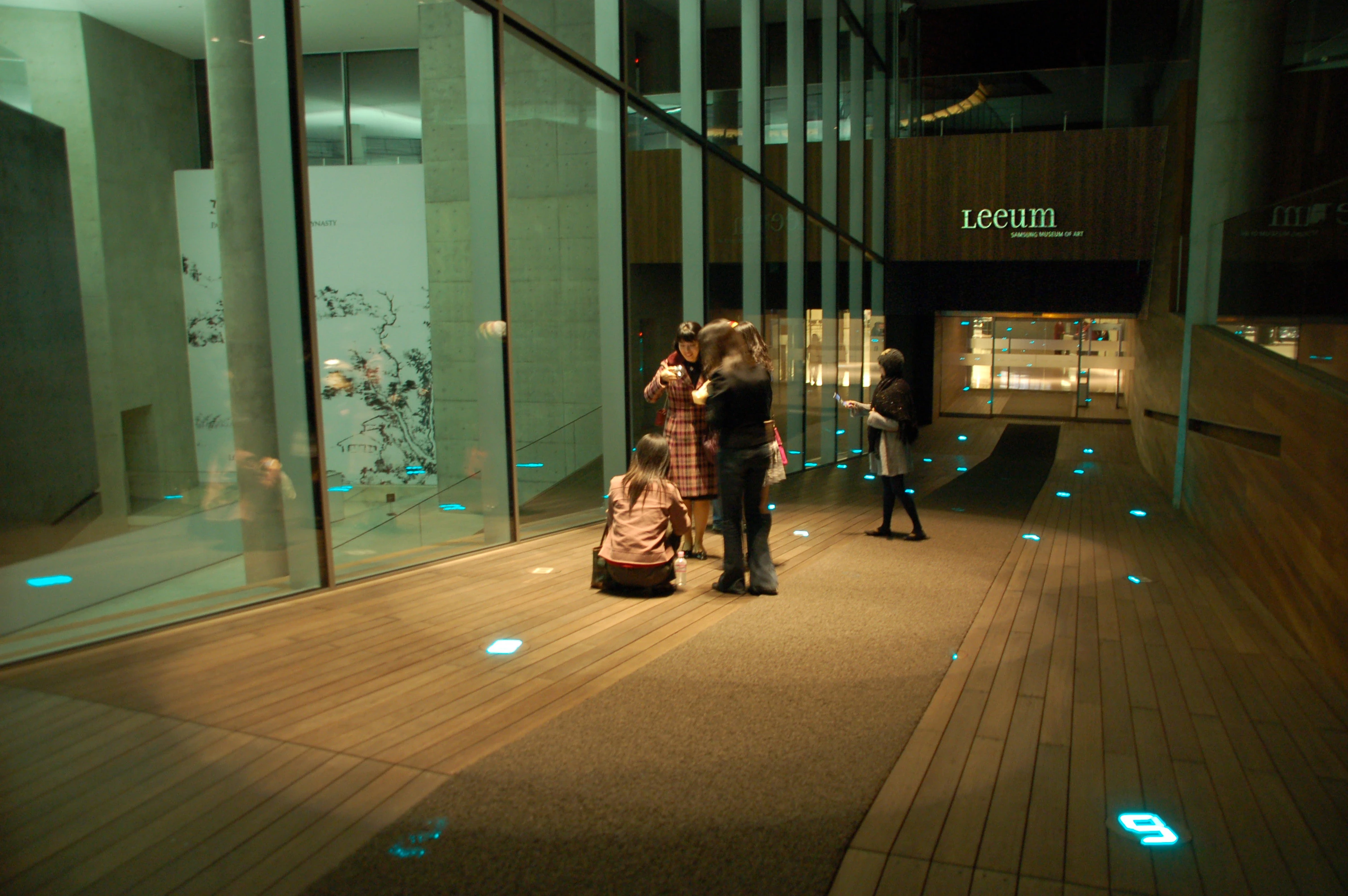
The Leeum Museum of Art is the private museum operated by the Samsung Foundation of Culture, opened in 2004 in Yongsan-gu at 60-16 Itaewon-ro 55-gil, in the Hannam-dong residential district. The museum is the architecturally most significant private art institution in Seoul, designed across three coordinated buildings by three Pritzker Prize-winning architects — Mario Botta (the traditional-art collection wing, in red brick), Jean Nouvel (the contemporary-art wing, in rusted steel and glass), and Rem Koolhaas (the special exhibitions wing, in black-pebble concrete cantilevered over the entrance courtyard). The combination is the most-cited example of contemporary museum architecture in Korea and remains the international architectural reference point for private Korean collections. Hours run 10:00 to 18:00 from Tuesday through Sunday; the museum is closed Mondays, New Year's Day, and the Lunar New Year and Korean Thanksgiving holidays. Permanent-collection admission is free; special exhibitions run KRW 18,000 to 20,000 for adults. The permanent collection presents Korean traditional art across the Bronze Age through the Joseon Dynasty alongside major international contemporary holdings (Olafur Eliasson, Anish Kapoor, Damien Hirst, Yayoi Kusama, On Kawara, and the Korean artists Park Seo-bo, Lee Ufan, and Suh Do-ho). The special-exhibitions programme rotates twice a year and has hosted major retrospectives from the Korean Dansaekhwa monochromatic-painting movement and from international contemporary artists. Language support is full Korean and English on the audio guide and the printed materials. The Leeum pairs naturally with APMA on a single Yongsan-gu afternoon and with Itaewon dining for the evening.
Featured D — Massimo De Carlo Seoul
Massimo De Carlo Seoul is the Korean outpost of the Italian mega-gallery founded by Massimo De Carlo in Milan in 1987, opened in the Apgujeong-Cheongdam district in 2022 as part of the broader wave of European gallery openings in Gangnam-gu. The gallery sits in Apgujeong-dong on the western edge of the Cheongdam contemporary district. Hours run Tuesday through Saturday, 11:00 to 18:00, closed Sundays and Mondays; admission is free. The gallery's programming runs in synchronisation with the Milan, London, Hong Kong, and Paris Massimo De Carlo spaces and presents major rotating shows from the gallery's roster, which leans toward painting and includes Yan Pei-Ming, Tony Lewis, Sanya Kantarovsky, Carla Accardi, John Armleder, and Wang Yuyang. The Seoul space sits within walking distance of Perrotin Seoul, White Cube Seoul, and KÖNIG GALERIE Seoul; the four galleries are commonly walked together in a single Cheongdam afternoon. Language support runs in English and Korean. The Seoul branch's stylistic register is the most painting-led of the four major European-gallery Cheongdam outposts — visitors whose primary frame of reference is the Milan and London contemporary painting scene will find this the strongest Cheongdam stop on a single-afternoon walk. Like the rest of the Cheongdam cluster, the gallery extends opening hours during Gallery Night Cheongdam in the major art-fair windows of early September each year, and the season is the strongest single window for first-time international visitors to walk the district in one evening.
Featured E — MMCA Seoul
The National Museum of Modern and Contemporary Art Seoul — known internationally as MMCA Seoul — is the flagship branch of the MMCA network, opened in 2013 in Jongno-gu at 30 Samcheong-ro, immediately east of Gyeongbokgung Palace on the site of the former Defense Security Command. The museum is the largest contemporary art institution operated by the Korean national government and the most-visited contemporary art venue in Seoul; the Seoul branch alone draws approximately 1.5 million visitors annually across exhibitions and programming. Hours run 10:00 to 18:00 from Wednesday through Monday, with extended hours on Wednesday and Saturday until 21:00; the museum is closed Tuesdays. Admission runs KRW 4,000 to 7,000 for adults depending on the exhibition tier, with free admission on Wednesday and Saturday evenings (18:00 to 21:00) and free admission for under-24 visitors year-round. The MMCA Seoul presents the major Korean contemporary retrospective programme — the museum has hosted full retrospectives of Park Seo-bo, Lee Ufan, Yun Hyong-keun, and Suh Do-ho — alongside the rotating international programme and the MMCA Hyundai Motor Series annual artist commission. The architecture is a coordinated low-rise complex by the Seoul-based architect Hyunjun Mihn, designed to integrate with the adjacent Gyeongbokgung palace compound and the Bukchon Hanok Village neighbourhood directly behind. Language support is full Korean, English, Japanese, and Chinese on the audio guide and the printed materials. The museum pairs naturally with Gyeongbokgung, Bukchon Hanok Village, and the Samcheong-dong gallery and cafe district on a single Jongno-gu day.
Featured F — National Museum of Korea
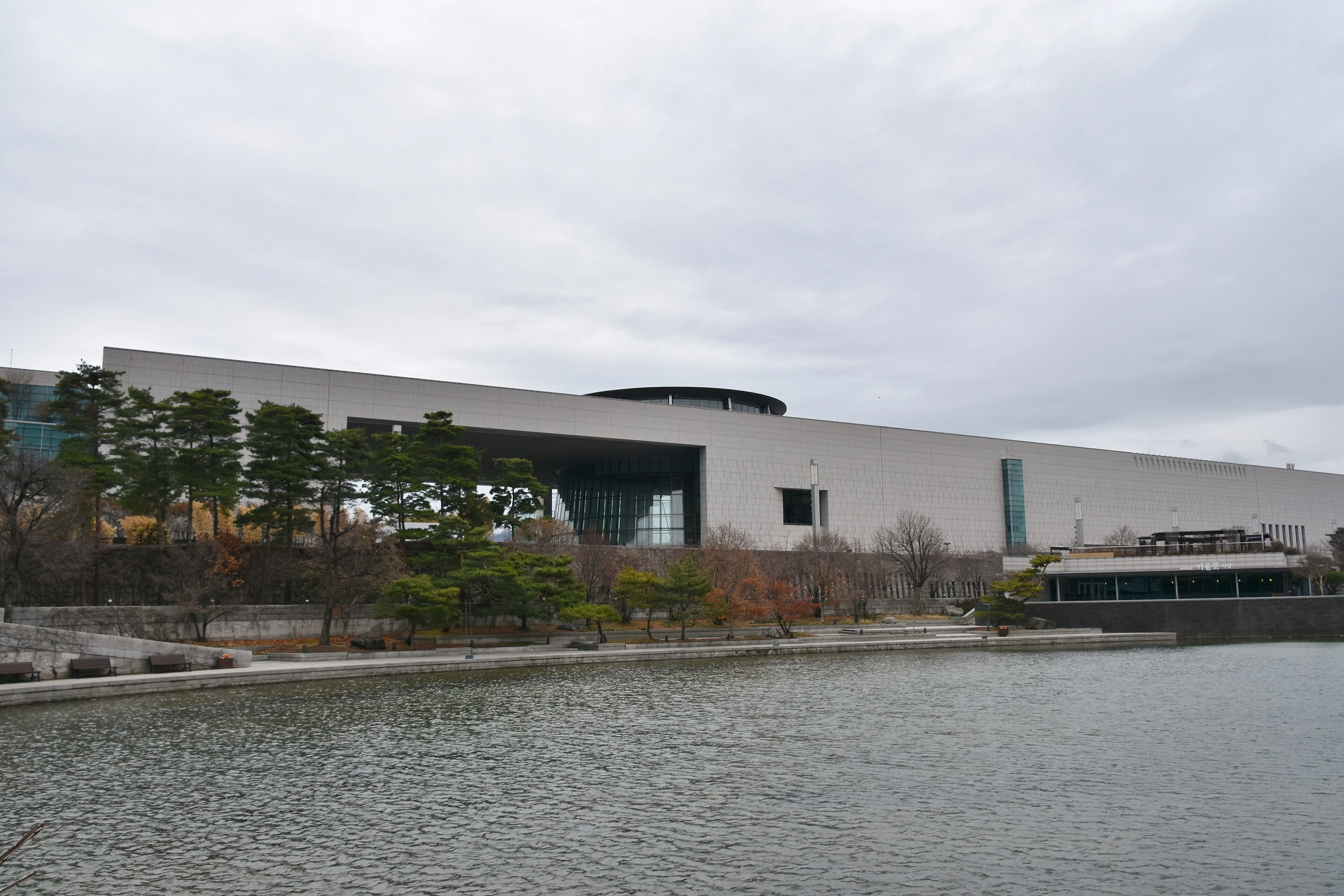
The National Museum of Korea, while primarily a museum of Korean traditional art and archaeology rather than a contemporary gallery, is included on this list because it is the largest museum in Korea and the institution that any first-time visitor to Seoul should treat as the foundational orientation visit. The museum opened on its current Yongsan-gu site in 2005 at 137 Seobinggo-ro, in the Yongsan Family Park, and holds approximately 410,000 artifacts spanning the Korean Palaeolithic through the early 20th century. Hours run 10:00 to 18:00 from Tuesday through Sunday, with extended hours on Wednesday and Saturday until 21:00; the museum is closed on New Year's Day and on the Lunar New Year and Korean Thanksgiving days. Admission to the permanent collection is free; special exhibitions run KRW 5,000 to 15,000. The signature room is the Pensive Bodhisattva gallery (Room 211) — a darkened single-object presentation of two seventh-century gilt-bronze Maitreya statues, both designated as National Treasures of Korea, in a custom-designed black-walled room that the museum redesigned in 2021 to give the objects extended quiet contemplation space. The room is widely cited by international curators as one of the strongest single-object museum installations in Asia. The museum's collection programme also covers Goryeo celadon, Joseon white porcelain, Buddhist sculpture, calligraphy, and the Korean Bronze Age. Language support is full Korean, English, Japanese, and Chinese on the audio guide and on free scheduled English-language docent tours. The museum pairs naturally with the Yongsan-gu axis (Leeum and APMA) on a multi-day Yongsan-gu itinerary, and the editorial board's working note is that visitors with a single Seoul museum afternoon should run National Museum of Korea first if they are coming to Seoul for the first time.
Featured G — Perrotin Seoul
Perrotin Seoul is the Korean outpost of the Paris-founded contemporary mega-gallery established by Emmanuel Perrotin in 1990, opened in the Cheongdam district in 2017 as one of the earliest European mega-gallery openings in Seoul and the gallery that catalysed the subsequent wave of openings in the district. The gallery sits in Cheongdam-dong and operates Tuesday through Saturday, 11:00 to 18:00, closed Sundays and Mondays; admission is free. The gallery's programming runs in synchronisation with the Paris, Hong Kong, Tokyo, New York, Shanghai, and Dubai Perrotin spaces and presents major rotating shows from the Perrotin roster — Takashi Murakami, Daniel Arsham, JR, KAWS, Bharti Kher, MR., and the Korean artists Lee Bae, Park Seo-bo, and Bae Bien-U. The Seoul branch has a particularly strong relationship with the Korean Dansaekhwa monochromatic-painting movement and has presented major shows from Park Seo-bo and Lee Ufan that helped reposition Korean Dansaekhwa in the international market over the late 2010s. The stylistic register of Perrotin Seoul is the most figurative and the most pop-culture-leaning of the four major European Cheongdam galleries — Takashi Murakami and KAWS shows draw the largest crowds in the district by some distance, and the gallery is the right Cheongdam stop for visitors whose primary frame of reference is the Paris and Hong Kong contemporary scene rather than the more conceptual Berlin and London end. Language support runs in English and Korean. The gallery participates in Gallery Night Cheongdam each September.
Featured H — Seoul Museum of Art (SeMA Seosomun)
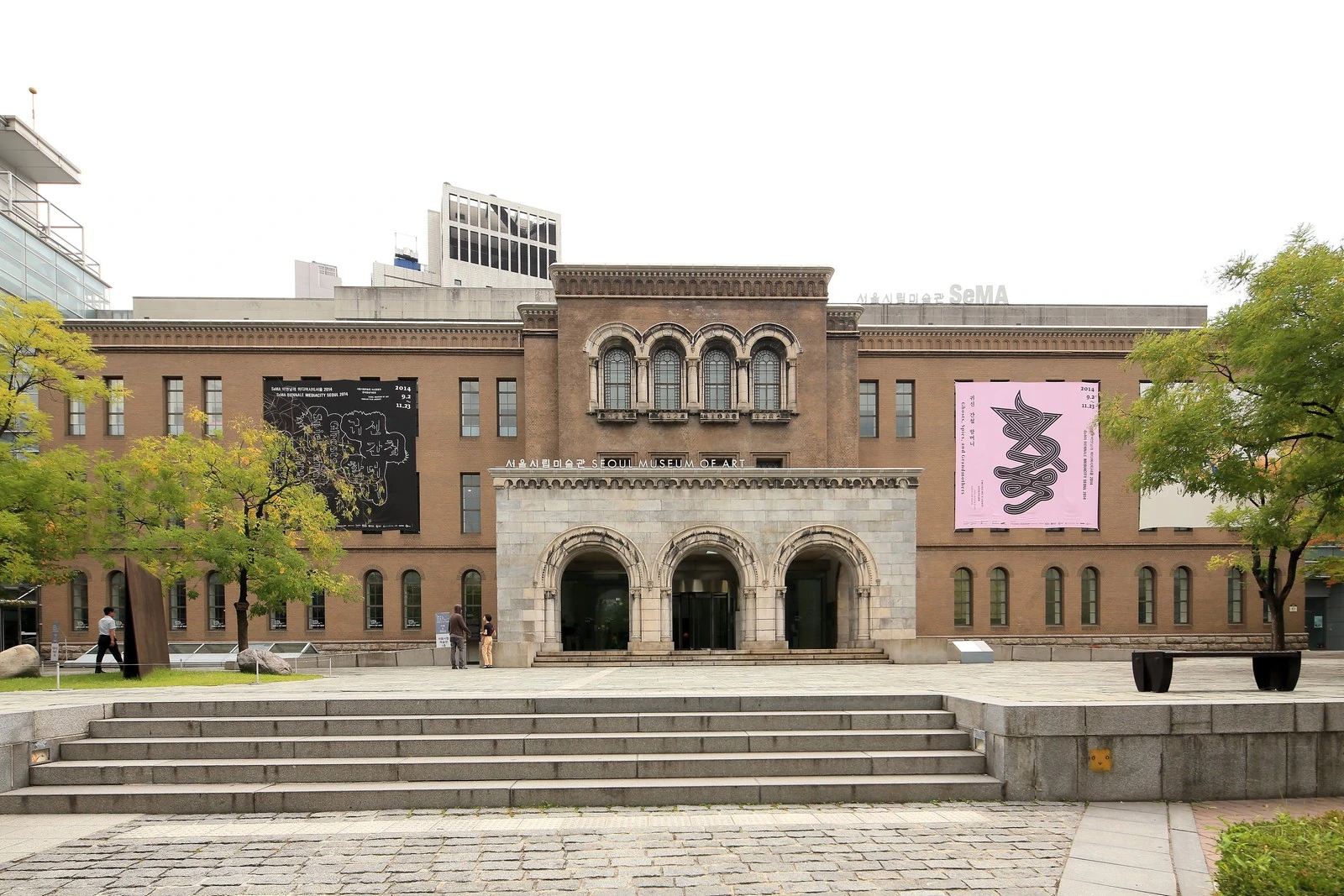
The Seoul Museum of Art — known by its abbreviation SeMA — is the city-government-operated contemporary art museum network, with the Seosomun main branch sitting in Jung-gu at 61 Deoksugung-gil, immediately west of Deoksugung Palace. The Seosomun building occupies the former Supreme Court of Korea building, a 1928 colonial-era structure that the city preserved in 2002 when it converted the building into a museum and added a contemporary glass-and-steel extension behind the original facade. Hours run 10:00 to 20:00 on weekdays and 10:00 to 19:00 on weekends; the museum is closed Mondays. Admission to the permanent collection is free; special exhibitions are typically free, with occasional ticketed major exhibitions running KRW 5,000 to 10,000. The museum operates as the flagship of a wider SeMA network that includes the SeMA Buk-Seoul branch in Nowon-gu, the SeMA Nam-Seoul branch in Gwanak-gu, and the SeMA Bukbu branch in Eunpyeong-gu, with the Seosomun main branch handling the major rotating contemporary exhibitions. The exhibition programme runs across Korean and international contemporary artists with a particularly strong record on Korean women artists, photography, and the post-1990 Korean contemporary cohort. Language support is full Korean and English on the printed materials, with audio guides also available in Japanese and Chinese on the major exhibitions. The museum pairs naturally with Deoksugung Palace, the Jeongdong walking corridor, and the Cheonggyecheon stream on a single Jung-gu afternoon. The free-admission policy makes SeMA the editorial board's strongest free-museum recommendation in central Seoul.
Featured I — SongEun ArtSpace
SongEun ArtSpace is a non-profit contemporary art foundation operating from a Herzog & de Meuron-designed building in the Cheongdam district at the intersection of Dosan-daero and Apgujeong-ro, opened in 2021 and immediately recognised as the most architecturally significant gallery building in the Cheongdam district. The building is the only Herzog & de Meuron commission in Korea — an eleven-storey triangular concrete tower with five underground floors, structured around a central atrium with rotating contemporary exhibitions distributed across multiple floor levels. The SongEun Art Foundation behind the space has run since 1989 and operates the SongEun Art Award, the Korean prize for emerging contemporary artists that is widely regarded as the highest-prestige Korean-artist award in the contemporary field. Hours run Tuesday through Saturday, 11:00 to 18:30; the space is closed Sundays, Mondays, and public holidays. Admission is free for all exhibitions and programming. The exhibition programme runs across Korean and international contemporary artists at a non-commercial register — the foundation does not sell work — and the editorial board's working note is that the architecture itself, combined with the curatorial quality of the SongEun Art Award programme and the rotating exhibitions, makes the space the strongest single Cheongdam stop for visitors whose primary frame of reference is the non-commercial institutional contemporary scene rather than the commercial European-mega-gallery cluster. Language support is full Korean and English on the printed materials and on the gallery website. SongEun pairs with the broader Cheongdam gallery walk and is the recommended starting point for visitors building a single-afternoon Cheongdam itinerary from north (SongEun, on Dosan-daero) southward through Apgujeong-dong (Massimo De Carlo) and east toward Cheongdam-dong (Perrotin, White Cube, KÖNIG).
Featured J — White Cube Seoul
White Cube Seoul is the Korean outpost of the London-founded contemporary mega-gallery established by Jay Jopling in 1993, opened in the Cheongdam district in 2023 as part of the broader wave of European gallery openings in Gangnam-gu. The gallery sits in Cheongdam-dong on the eastern edge of the European-mega-gallery cluster, within walking distance of Perrotin Seoul, Massimo De Carlo Seoul, and KÖNIG GALERIE Seoul. Hours run Tuesday through Saturday, 11:00 to 18:00, closed Sundays and Mondays; admission is free. The gallery's programming runs in synchronisation with the London (Bermondsey and Mason's Yard), Hong Kong, New York, Paris, and Los Angeles White Cube spaces and presents major rotating shows from the White Cube roster — Tracey Emin, Antony Gormley, Anselm Kiefer, Jake & Dinos Chapman, Mona Hatoum, Doris Salcedo, and the Korean artists Park Seo-bo, Suh Do-ho, and Lee Ufan. The stylistic register of White Cube Seoul is the most conceptual and the most sculpture-and-installation-leaning of the four major European Cheongdam galleries — Anselm Kiefer's monumental lead-and-straw works, Antony Gormley's body-cast iron sculptures, and the Doris Salcedo and Mona Hatoum installation programme define the Seoul space's identity in the district. The gallery participates in Gallery Night Cheongdam each September, with extended opening hours and artist talks during the Frieze Seoul and KIAF week. Language support runs in English and Korean. The Seoul branch is the right Cheongdam stop for visitors whose primary frame of reference is the London and New York conceptual-and-installation contemporary scene.
How to plan a Seoul gallery itinerary — Cheongdam day vs. Yongsan-Jongno day
The editorial board's working orientation for international visitors is that the strongest Seoul gallery itinerary runs as two separate full days rather than as a single combined day, because the north-of-the-Han museum cluster and the south-of-the-Han gallery district operate on different opening-hour cadences and at different stylistic registers. The recommended structure is as follows. The Yongsan-Jongno museum day pairs an early-morning National Museum of Korea visit (arriving at the 10:00 opening to walk the permanent collection in the first quiet hours before tour groups arrive) with a mid-morning move to the Leeum Museum of Art in Hannam-dong, then an afternoon at MMCA Seoul in Samcheong-dong (closer to the Gyeongbokgung-Bukchon corridor), and a closing stop at SeMA Seosomun in Jung-gu in the early evening (the 20:00 closing on weekdays makes SeMA the right end-of-day stop). This day is approximately 25 to 30 kilometres of travel by taxi and metro and works best with a hired-car driver for the day. The Cheongdam gallery day pairs an 11:00 SongEun ArtSpace opening (the architecture-and-Korean-contemporary register) with a walking sequence south through Apgujeong (Massimo De Carlo) and east through Cheongdam-dong (Perrotin, White Cube, KÖNIG GALERIE), closing with the smaller-gallery cluster (Lee Eugean, 333 Gallery, SH Gallery) if time permits, and ending with a Cheongdam evening — the district has the strongest Apgujeong-Cheongdam dining cluster in Seoul, and the major omakase and fine-dining rooms (including the two-Michelin-starred Mingles, Jungsik, Kwon Sook Soo, and Kojima) sit within a 10-minute taxi radius of the gallery walk. This day is approximately 4 to 6 kilometres of walking and works best without a car. The strongest single-week window for a Seoul gallery trip is the first week of September, when Frieze Seoul and the Korea International Art Fair (KIAF) run concurrently and the Cheongdam galleries extend opening hours under the Gallery Night Cheongdam programme; second-strongest is the late-October MMCA Hyundai Motor Series annual commission opening window. The editorial board's strongest single-day recommendation, if a visitor has only one Seoul day for art, is the Yongsan-Jongno museum day in early autumn.
Frieze Seoul, KIAF, and the major art-fair calendar
Seoul's art-fair calendar has reorganised significantly over the past three years and is now anchored around Frieze Seoul and the Korea International Art Fair (KIAF), which run concurrently in early September each year and have established Seoul as a primary Asia stop for international collectors. Frieze Seoul, opened in 2022 under a five-year partnership between Frieze and the Korean galleries association, runs at COEX in Gangnam-gu (with Frieze Masters and Frieze Focus Asia sections running alongside the main Frieze programme) and draws approximately 70,000 visitors across the four-day fair week. KIAF, the longer-established Korean fair operated since 2002, runs concurrently at the same COEX venue (the fairs share badge access for paid attendees) and presents a denser Korean-gallery roster than Frieze does, including the major Seoul commercial galleries Kukje, Hyundai, Hakgojae, Arario, PKM, and Gana. Around the two fairs, the Cheongdam gallery district runs the unofficial Gallery Night Cheongdam programme on the Thursday and Friday evenings of fair week, with all the major European-mega-galleries (Perrotin, White Cube, Massimo De Carlo, KÖNIG, Pace, Lehmann Maupin, Thaddaeus Ropac, Gladstone) extending opening hours and hosting artist talks and openings. The Yongsan-Jongno museums also run major-exhibition opening windows aligned to fair week — Leeum, MMCA Seoul, and APMA have each opened headline exhibitions during the September fair window in recent years. For international visitors planning a Seoul art trip, the first week of September is the highest-density single week of the year, and bookings for accommodation, fine-dining, and gallery openings should run at least three months ahead of the fair dates. The April KIAF Plus contemporary-art week at the SETEC venue in Gangnam-gu is the second-strongest Seoul art week and runs at meaningfully lower visitor density than the September week. Visitors arriving outside the major fair windows still find the full ten-institution programme operating; the editorial board's working note is that off-season visits trade the fair-week density for quieter exhibition viewing and easier reservation access.
Editorial method — what is on this list and what is not
The list above includes both contemporary art museums (institutional, ticketed, with permanent collections) and commercial contemporary galleries (Cheongdam district, free admission, gallery-roster-led programming) — the editorial board has combined the two categories on this single shortlist because international visitors building a Seoul art trip routinely walk both kinds of institutions in a single trip and the two categories function as complements rather than as substitutes. Several Seoul art institutions that international visitors occasionally hear about — including the Ilmin Museum of Art in Jongno-gu, the Daelim Museum in Jongno-gu, the Coreana Museum of Art (space*c) in Gangnam-gu, the OCI Museum in Jongno-gu, the Sungkok Art Museum in Jongno-gu, the Arko Art Center in Jongno-gu, and the Total Museum of Contemporary Art in Pyeongchang-dong — are excellent institutions in their own right but sit outside the editorial cut for this particular shortlist of ten. The Pace, Lehmann Maupin, Thaddaeus Ropac, and Gladstone outposts in the Cheongdam district are also outside the cut despite operating at the same scale as the four European mega-galleries we have included; the four selected (Perrotin, White Cube, Massimo De Carlo, KÖNIG GALERIE) were chosen to span four different stylistic registers across the district rather than to list every mega-gallery operating in Seoul. The Dongdaemun Design Plaza (DDP), the War Memorial of Korea, the National Folk Museum of Korea, the Seoul Museum of History, and the D Museum are covered in our broader museum directory but were held off this contemporary-art shortlist because their programming sits in a different register. This list is updated against material changes in venue hours, admission, or programming; visitors should reconfirm at the time of planning. The editorial board does not maintain commercial relationships with any of the ten institutions on this list; inclusion is editorial.
“Run the museum cluster on one day, the Cheongdam gallery district on another. Do not run them together. — Gangnam Meditour Editorial Board”
Frequently asked questions
Which Seoul museum is the strongest single-visit orientation for a first-time visitor?
The National Museum of Korea in Yongsan-gu is the editorial board's strongest single-visit orientation. The 410,000-artifact collection spans the Korean Palaeolithic through the early 20th century, the permanent collection is free, and the signature Pensive Bodhisattva room is widely cited as one of the strongest single-object museum installations in Asia.
Are the Cheongdam galleries free to visit?
All major Cheongdam contemporary galleries — including Perrotin Seoul, White Cube Seoul, Massimo De Carlo Seoul, KÖNIG GALERIE Seoul, and SongEun ArtSpace — operate with free admission. The galleries run Tuesday through Saturday, 11:00 to 18:00, closed Sundays and Mondays. Admission is free year-round.
When does Frieze Seoul take place?
Frieze Seoul runs each early September concurrently with the Korea International Art Fair (KIAF) at the COEX venue in Gangnam-gu. The four-day fair draws approximately 70,000 visitors, and the Cheongdam gallery district runs the unofficial Gallery Night Cheongdam programme with extended opening hours and artist talks during fair week.
Is the Leeum Museum of Art free?
Leeum's permanent collection is free for all visitors. Special exhibitions run KRW 18,000 to 20,000 for adults. The museum is closed Mondays. The Mario Botta, Jean Nouvel, and Rem Koolhaas tri-architect building is itself one of Korea's most-cited examples of contemporary museum architecture and is widely covered in the international architecture press.
Which museum is the strongest free contemporary-art recommendation in central Seoul?
Seoul Museum of Art (SeMA Seosomun) in Jung-gu is the strongest free contemporary-art recommendation in central Seoul. The Seosomun branch occupies the preserved 1928 former Supreme Court building immediately west of Deoksugung Palace. Permanent-collection admission is free; the museum runs 10:00 to 20:00 on weekdays.
How does MMCA Seoul handle language support?
MMCA Seoul provides full Korean, English, Japanese, and Chinese on audio guides and printed exhibition materials, with English-language docent tours scheduled multiple times daily. The museum runs free admission on Wednesday and Saturday evenings from 18:00 to 21:00, and free admission year-round for visitors under age 24.
Can I walk the major Cheongdam galleries in a single afternoon?
The major Cheongdam contemporary galleries — SongEun ArtSpace, Perrotin Seoul, White Cube Seoul, Massimo De Carlo Seoul, and KÖNIG GALERIE Seoul — sit within an approximately 4 to 6 kilometre walking radius and can comfortably be covered in a single 11:00 to 18:00 afternoon, with time for two or three smaller galleries (Lee Eugean, 333 Gallery, SH Gallery) as well.
What is the SongEun Art Award?
The SongEun Art Award is the contemporary-art prize operated by the SongEun Art Foundation since 1989, widely regarded as the highest-prestige Korean-artist award in the contemporary field. The award programme runs as a regular exhibition cycle at the Herzog & de Meuron-designed SongEun ArtSpace in Cheongdam, with all exhibitions free to enter.