Treatment Guide
Thermage FLX in Korea
Monopolar radiofrequency tightening for skin laxity — what it does, where it sits in a Korean treatment programme, and how it compares with focused ultrasound.
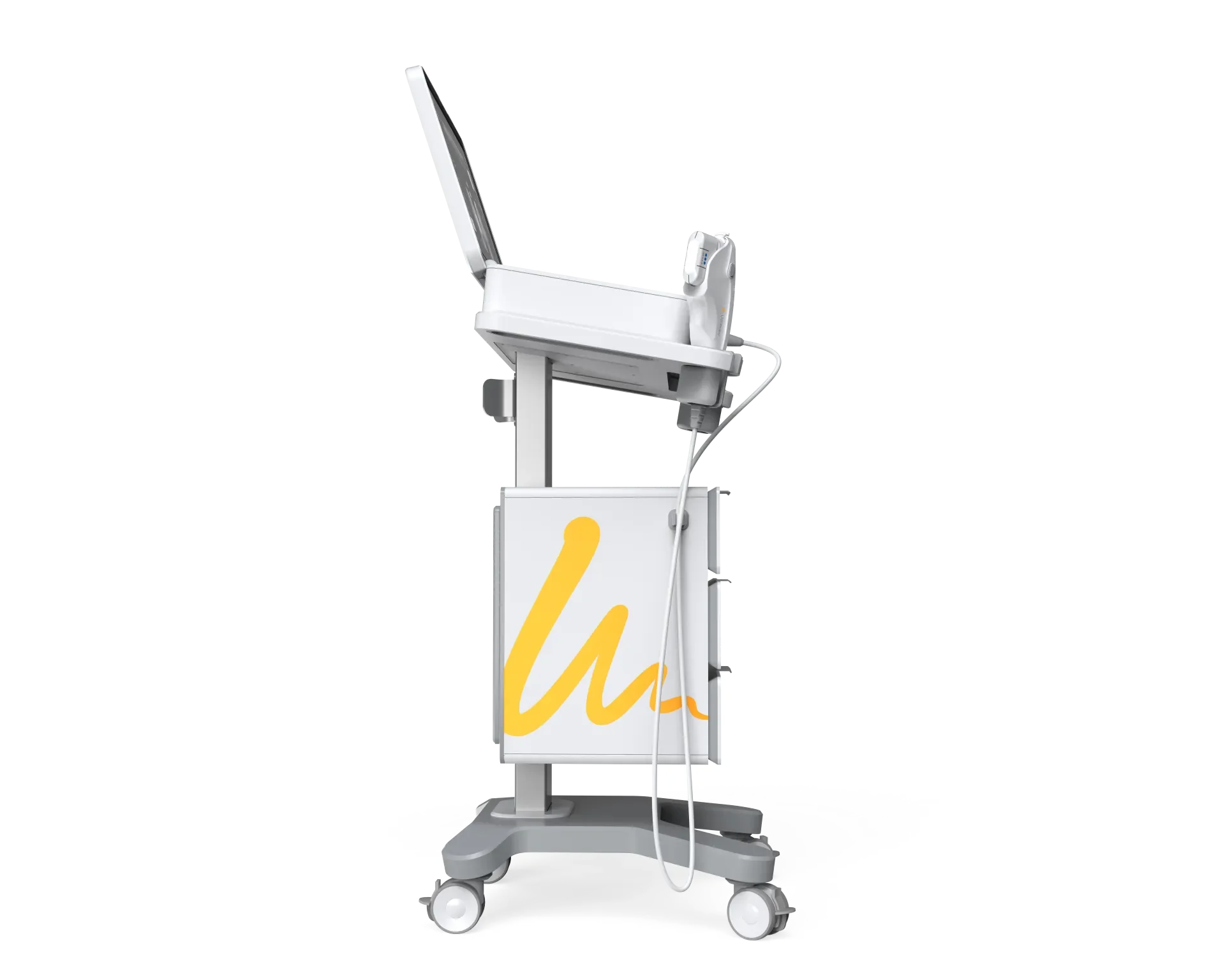
Thermage FLX is the current generation of Solta Medical's monopolar-radiofrequency tightening platform, working through the dermis and subcutaneous tissue rather than at the SMAS. The clinical effect is, broadly, skin tightening — a refinement of laxity rather than a structural lift. Where Ultherapy PRIME generates collagen remodelling at SMAS depth and reads as a structural elevation, Thermage FLX generates volumetric heating across the dermal layer and reads as a tightening of the skin envelope itself. The two platforms address related but distinct clinical lanes; many Korean clinics protocol them in combination across two visits separated by several weeks. Thermage FLX is particularly suited to patients with mild-to-moderate skin laxity, fine surface texture concerns, and a preference for a single annual maintenance treatment over a multi-session programme. We cover the platform here at the level of patient-facing orientation; for deeper editorial coverage of named clinics, see the dedicated Thermage FLX archive for Gangnam-area practice.
What Thermage FLX does, mechanistically and clinically
Thermage FLX delivers monopolar radiofrequency energy through a flat-tip handpiece, with the energy distributed volumetrically through the dermis and into the subcutaneous adipose layer. The thermal effect — controlled at the dermal level, with simultaneous cryogen cooling at the skin surface — denatures collagen fibres, triggers a wound-healing cascade, and prompts the gradual deposition of new collagen over three to six months. The clinical reading is improved skin firmness, reduced fine-line laxity, and modest tightening of jowl and submental contour. Thermage FLX is not a structural lift platform; patients with substantial jowl descent, visible platysmal banding, or marked brow ptosis are candidates for surgical or focused-ultrasound work, not Thermage. The FLX generation differs from the older NXT generation in three practical ways: faster delivery (Total Tip 4.0 covers more area per shot), smarter algorithms (vibration assist for tolerability), and a wider integrated handpiece menu (Eyes Total Tip for periocular treatment, Body Total Tip for off-face areas). The Solta Medical authorised-provider portal is the authoritative reference for verifying that a Korean clinic operates an authentic Thermage FLX platform.
Shot count, region selection, and protocol structure
Korean clinics typically protocol Thermage FLX on a shot-count basis tied to the treatment region. A face protocol commonly runs 600 to 900 shots, a face-and-neck protocol 900 to 1,200 shots, and a face-neck-and-eye-area protocol up to 1,500 shots when periocular treatment is included. The shot count drives the delivered energy dose and, in proportion, the magnitude of the tightening response. The protocol the consulting physician proposes should be calibrated to the patient's anatomical priorities — patients whose primary concern is jowl tightening will receive a different distribution from patients whose primary concern is forehead or periocular firming. Eye-area treatment with the Eyes Total Tip is a notable Thermage FLX-specific application for upper- and lower-lid laxity in patients not yet ready for blepharoplasty surgery. The treatment is typically delivered in a single session per region, with the next visit scheduled twelve to eighteen months later for maintenance.
Tolerability, downtime, and the realistic experience
Thermage FLX is more tolerable than the older NXT generation thanks to vibration assist, but it remains a sensation-rich treatment. Patients describe a brief deep heat at each pulse, accompanied by transient warmth and occasional sharp sensation at higher energy settings. Korean clinics manage discomfort with topical anaesthesia for 30 to 45 minutes prior, sometimes supplemented with oral analgesia. Downtime is functionally zero for most patients: mild erythema for a few hours, occasional transient swelling, and a low probability of small bruises at high-energy zones. There are no incisions, no general anaesthesia, no bandages. Patients commonly attend dinner the same evening. Unlike Ultherapy PRIME, Thermage FLX does not produce a delayed onset of obvious lifting; the tightening effect is more diffuse, develops more gradually, and reads less as a visible change and more as a quality-of-skin improvement. Patients seeking dramatic transformation are reliably disappointed; patients seeking gradual maintenance of skin firmness with a single annual session typically read the result as worthwhile.
How Thermage FLX is sequenced with other modalities
In Korean clinical practice, Thermage FLX is rarely used in isolation for international patients seeking comprehensive non-surgical work. The conventional sequencing pairs Thermage FLX with Ultherapy PRIME or Sofwave on a separate visit — energy-based work first at SMAS depth, dermal tightening second, with two to four weeks between sessions to let the initial response settle. Some clinics protocol Thermage FLX in the same trip as regenerative bio-active work (exosome or growth-factor boosters), with the bio-active session timed 48 to 72 hours after the Thermage to allow surface healing. Combination programmes generate a more complete result than any single modality and are particularly suited to international patients who can budget a five-to-seven-day Seoul trip. The senior physician should plan the sequence; do not improvise across multiple clinics in a single trip. For broader context on combination programmes, see the MFU/HIFU treatment guide and our aftercare guide for the post-procedure window that determines whether the programme actually delivers.
Korean pricing context and where to consult
Thermage FLX pricing in Korea typically ranges from KRW 1,800,000 to KRW 4,500,000 for a face protocol, with face-and-neck protocols at the higher end and full face-neck-eye protocols approaching KRW 6,000,000. Myeongdong clinics often run lower than Gangnam premium clinics; Incheon Airport pricing varies. The price difference is largely a function of shot count, physician seniority, and clinic positioning rather than platform authenticity — all authorised Thermage FLX providers operate the same Solta device. International patients in Korea typically consult and treat in a single trip; consultation in the morning, treatment same-day or next-day, is a common structure for patients arriving from Hong Kong, Singapore, Taiwan, or Japan. For deeper editorial coverage of named Korean clinics offering Thermage FLX, see our Gangnam region archive and Myeongdong region archive, each of which links out to the specialised Thermage publisher archive.
Frequently asked questions
What is the difference between Thermage FLX and the older NXT?
FLX is the current generation: faster delivery (Total Tip 4.0), smarter algorithms with vibration assist for improved tolerability, and a wider integrated handpiece menu including Eyes Total Tip for periocular treatment. The clinical mechanism — monopolar radiofrequency dermal heating — is the same.
How does Thermage FLX compare with Ultherapy PRIME?
They address related but distinct lanes. Thermage FLX generates volumetric dermal heating and reads as skin tightening; Ultherapy PRIME generates focused thermal coagulation at SMAS depth and reads as structural lifting. Many Korean clinics protocol them in sequence across two separate visits, addressing different aspects of the same overall presentation.
How long does the Thermage FLX result last?
The tightening response develops over three to six months and persists for twelve to eighteen months in most patients. Annual maintenance treatment is typical; some patients with rapid laxity progression schedule six-month top-ups.
Is Thermage FLX painful?
It is sensation-rich rather than uniformly painful. Higher energy settings produce brief sharp heat at the pulse point. Vibration assist on the FLX generation has improved tolerability over the older NXT generation. Topical anaesthesia for 30 to 45 minutes prior is standard.
Can Thermage FLX treat the eye area?
Yes — the Eyes Total Tip handpiece, integrated with the FLX platform, is approved for periocular skin tightening, including upper- and lower-lid laxity. The treatment is well-suited to patients with mild lid laxity who are not yet ready for blepharoplasty surgery; candidacy should be confirmed in consultation.
How do I verify a Korean clinic operates an authentic Thermage FLX?
The Solta Medical authorised-provider portal at solta.com publishes the global list. We cross-check clinic claims against the manufacturer list before publishing editorial coverage; readers can independently verify before booking.